| Reading |
|---|
| The whole Bible, chapter by chapter | ✓YesEvery chapter, each verse exactly as held and named by its translation | ✓YesEvery chapter, with tools on each verse | ✓YesEvery Bible in your library, on desktop, web and phone |
|---|
| Translations | PartlyNine public-domain English translations; no modern licensed ones such as the NIV or ESV | ✓YesOver 30 versions, in several languages | ✓YesThe modern translations, most bought singly or in bundles |
|---|
| Modern licensed translations, such as the NIV or ESV | ✗NoNot yet; public-domain translations only | ✓YesThe NIV, ESV, NASB and others among its versions | ✓YesSold singly, such as the ESV |
|---|
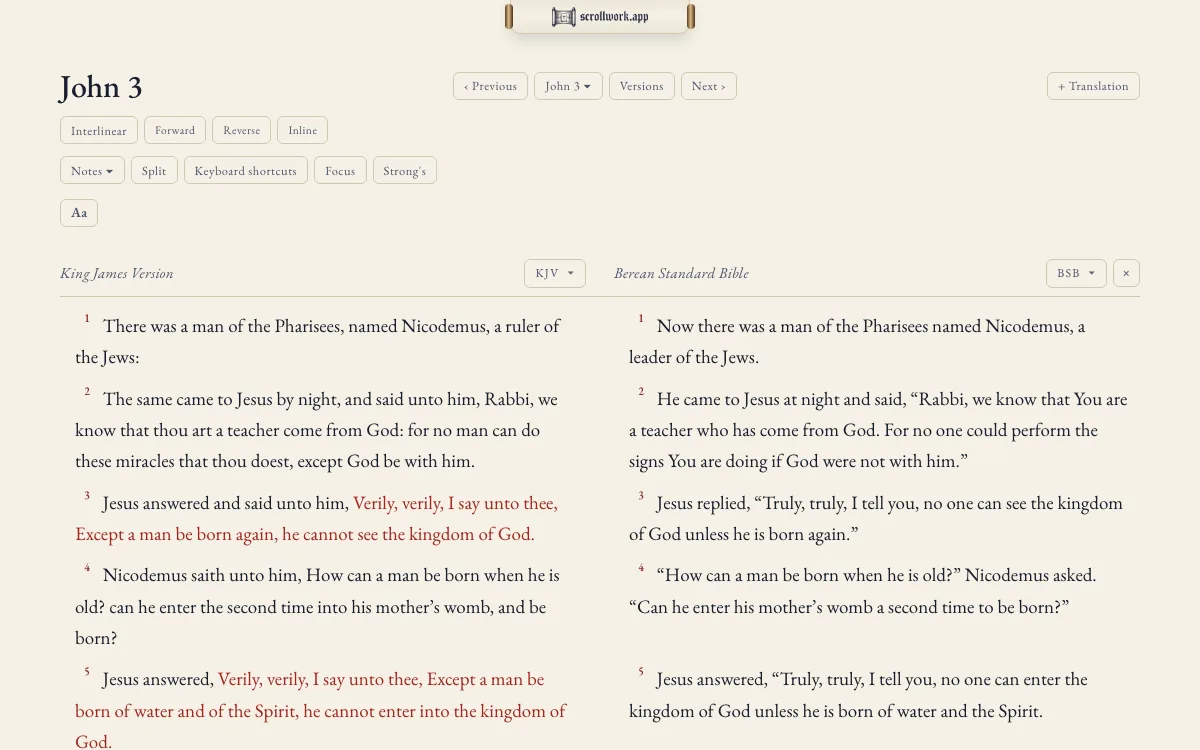
| Up to four translations side by side, verse level with verse | ✓YesTwo to four columns, row by row | PartlyTwo at a time | ✓YesCompares any number of translations |
|---|
| Flip a column between two translations | ✓YesTwo translations in a column's header, one flip between them, the place kept | ✗NoA drop-down changes each pane's version; no flip between two | ✓YesThe arrow keys cycle the open Bible through its parallel Bibles at the same place |
|---|
| The text in up to four columns, like a printed page | ✓YesOne translation flowed in one to four columns, as the screen allows | ✗NoNo such layout among the options on the pages read | ✓YesPaged View lays the text out in columns, as a paper book |
|---|
| Two different passages side by side | ✓YesSplit: a second passage beside the first | ✗NoNo such view in its help or manuals | –Not confirmedNot settled by its own pages |
|---|
| A keyboard shortcuts sheet | ✓YesPress ? for every shortcut | ✗NoNone in its help or video tutorials | –Not confirmedNot settled by its own pages |
|---|
| Focus mode, every control hidden | ✓YesEvery control hidden until you move | –Not confirmedNot settled by its own pages | –Not confirmedNot settled by its own pages |
|---|
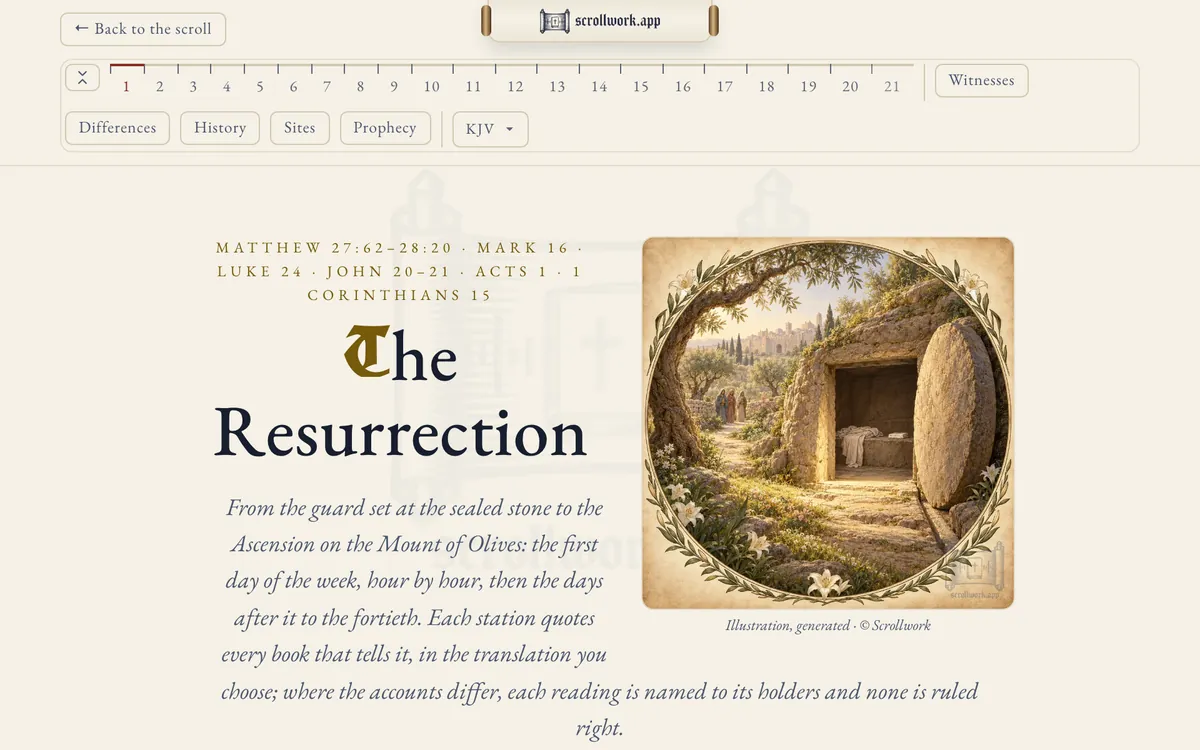
| Paper themes and text size | ✓YesText size, spacing, typeface and paper themes | ✓YesThemes and font size in the apps; font size on the web | ✓YesFont size and white, sepia or dark themes |
|---|
| Reading plans | ✗NoNot yet; planned after the first release | ✓YesEight plans, with a reading meter | ✓YesFor all users, progress kept |
|---|
| Reading history | ✓YesThe chapters you read, kept on your device | PartlyIn the apps only; none on the website | –Not confirmedNot settled by its own pages |
|---|
| How much of the Bible you have read | ✓YesMy Progress: the books you have read | PartlyA reading plan's meter only | PartlyA reading plan's progress only |
|---|
| Audio Bible | ✗NoNot yet; planned after the first release | ✓YesNarrated and dramatized Bibles, and audio commentaries | ✓YesAudio Bibles, sold in its shop |
|---|
| Original languages |
|---|
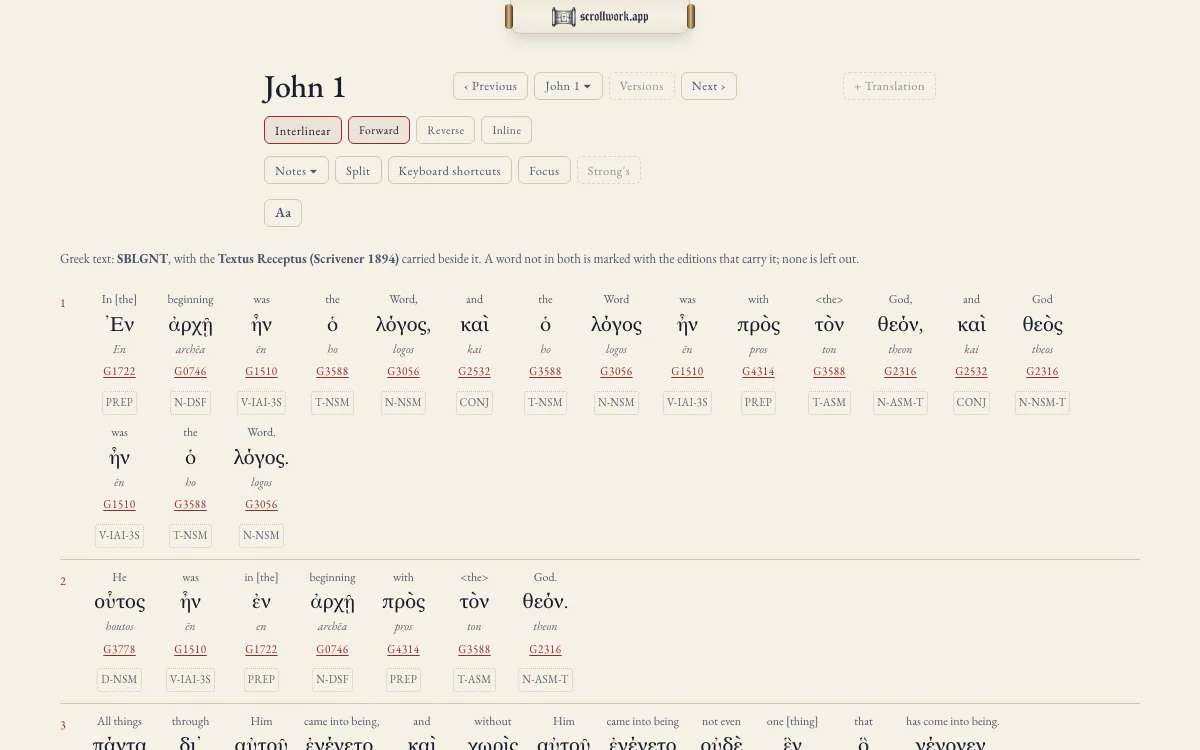
| Interlinear | ✓YesEach word with its original, Strong's number and grammar | ✓YesEach verse's words with Strong's numbers, and an inline interlinear of a chapter | ✓YesReverse interlinears, sold for many translations |
|---|
| The Hebrew and Greek read as a text | ✓YesAlone or beside a translation | ✓YesThe WLC, LXX, mGNT and TR among its versions | ✓YesIn Logos Plus, a paid plan; the free edition not stated |
|---|
| Strong's numbers over the King James words | ✓YesA toggle, on the web and a phone | ✓YesOn the website; not yet in its iPhone and iPad apps | –Not confirmedNot settled by its own pages |
|---|
| Interlinear on a phone | ✓YesThe interlinear in the phone's own form | –Not confirmedNot settled by its own pages | ✗NoIts phone app shows no original language inline |
|---|
| The grammar of each word | ✓YesEach morphology code spelled out in words | ✓YesTense, voice and mood in the interlinear | ✓YesSearch by lemma and by parsing |
|---|
| Lexicons | PartlyStrong's dictionary and STEPBible's brief lexicon, both open; no licensed lexicons | ✓YesStrong's, Thayer's, Gesenius and more, some licensed | ✓YesLicensed lexicons, and its own Bible Sense Lexicon |
|---|
| Every occurrence of a word | ✓YesGrouped by book, with the King James renderings and their counts | ✓YesEvery verse a word occurs in, with King James counts | ✓YesThe Bible Word Study: renderings, senses and counts |
|---|
| Study tools |
|---|
| Cross-references | ✓YesOn 30,496 verses: OpenBible.info's set by votes, the Treasury of Scripture Knowledge, then the verses that refer to each; each names its source | ✓YesThe Treasury of Scripture Knowledge, with about 100,000 more references added | ✓YesIn the Passage Guide |
|---|
| Commentaries | PartlyMatthew Henry's whole commentary, one classic; more after the first release | ✓YesOver 8,000 by over 40 authors, classic and modern | ✓YesMany, most bought for your library |
|---|
| A guide to the passage | ✓YesThe Passage Guide: cross-references, Matthew Henry, its people, places and art, and your notes | PartlyTool tabs on each verse rather than one guide | ✓YesThe Passage Guide gathers your library on a passage |
|---|
| Bible dictionaries | PartlyEaston's on each book, in the Bible Library chart; not yet in the reader | ✓YesEaston's, Smith's, the ISBE, Nave's, Torrey's and more | ✓YesDictionaries, even in the free edition |
|---|
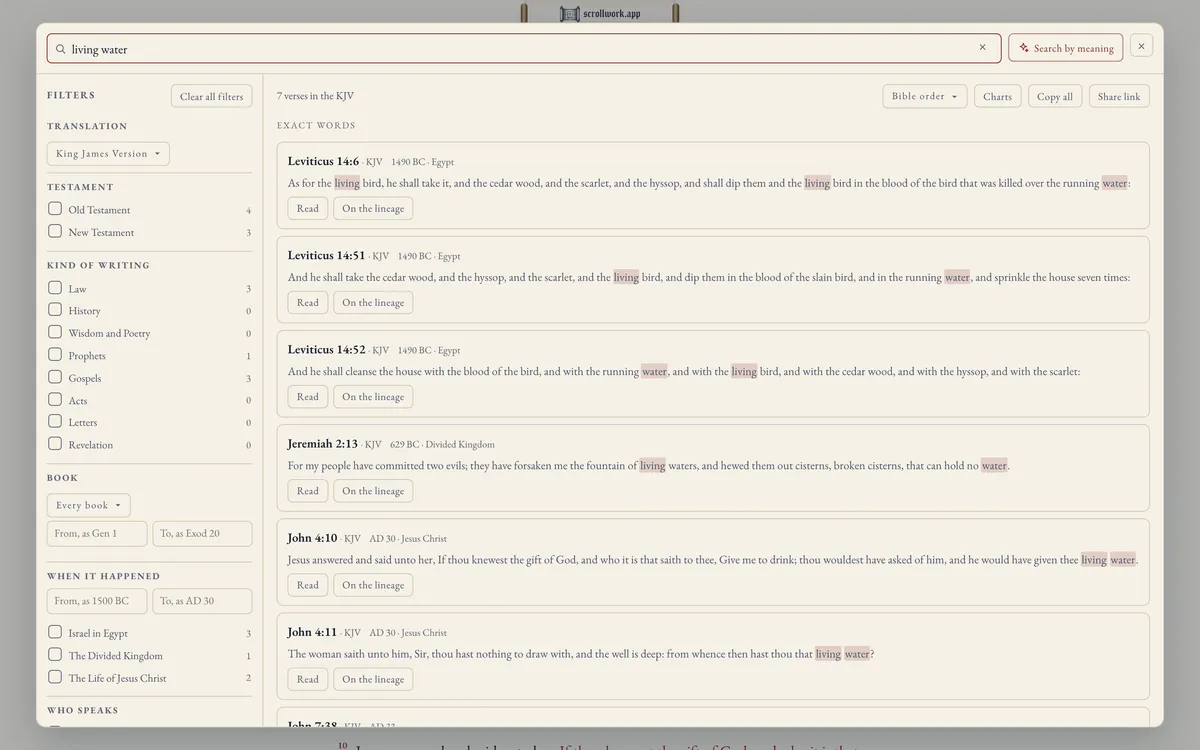
| Search the Bible's text | ✓YesWords and phrases with AND, OR, NOT and wildcards, by translation, testament, book, a custom range or the kind of writing | ✓YesWords, phrases, Boolean searches and wildcards | ✓YesSmart Search in Bibles |
|---|
| Search the original languages | ✓YesHebrew and Greek by Strong's number, lemma, transliteration or part of speech | PartlyBy Strong's number; a word's part of speech is shown in its lexicon, not searched | ✓YesMorph Search by grammatical form, in Logos Max or the former Bronze and above |
|---|
| Topics | ✓YesNave's Topical Bible and OpenBible.info's topics, each credited | ✓YesNave's and Torrey's topical, in its dictionary search | ✓Yestopic: searches, the Topic Guide and the Factbook |
|---|
| Search by meaning | ✓YesAsk in your own words; at one click the AI service Scrollwork uses finds related passages, within a daily limit | ✗NoNot among the searches its help describes | ✓YesSmart Search answers a question; a subscription, beyond a few free tries |
|---|
| Who speaks | ✓YesThe words of Jesus: the verses the King James marks in red | ✗NoThe words of Christ in red are a display setting, not a search filter | ✓Yesspeaker:Jesus, from its speaker labels |
|---|
| People, places and events in a search | ✓YesFilter by the people and places a verse names, combined, or by an event | ✗NoNot among the search options its help describes | ✓YesPerson:, place and event: searches |
|---|
| Search results charted | ✓YesThe hits by book and across time | PartlyCounts by version and results by book; no chart | ✓YesThe Charts tool graphs hits by book or chapter |
|---|
| A search shared and copied | ✓YesA link carrying the words and filters; Copy all, each verse with its reference and translation | ✓YesResults at their own address; select all and copy | ✓YesCopy Location makes a link; results copied from Print/Export on the desktop |
|---|
| Search runs on your device, your words never sent | ✓YesWords, topics and filters searched on your device | ✗NoIts search is a page on its server | –Not confirmedNot settled by its own pages |
|---|
| Your study |
|---|
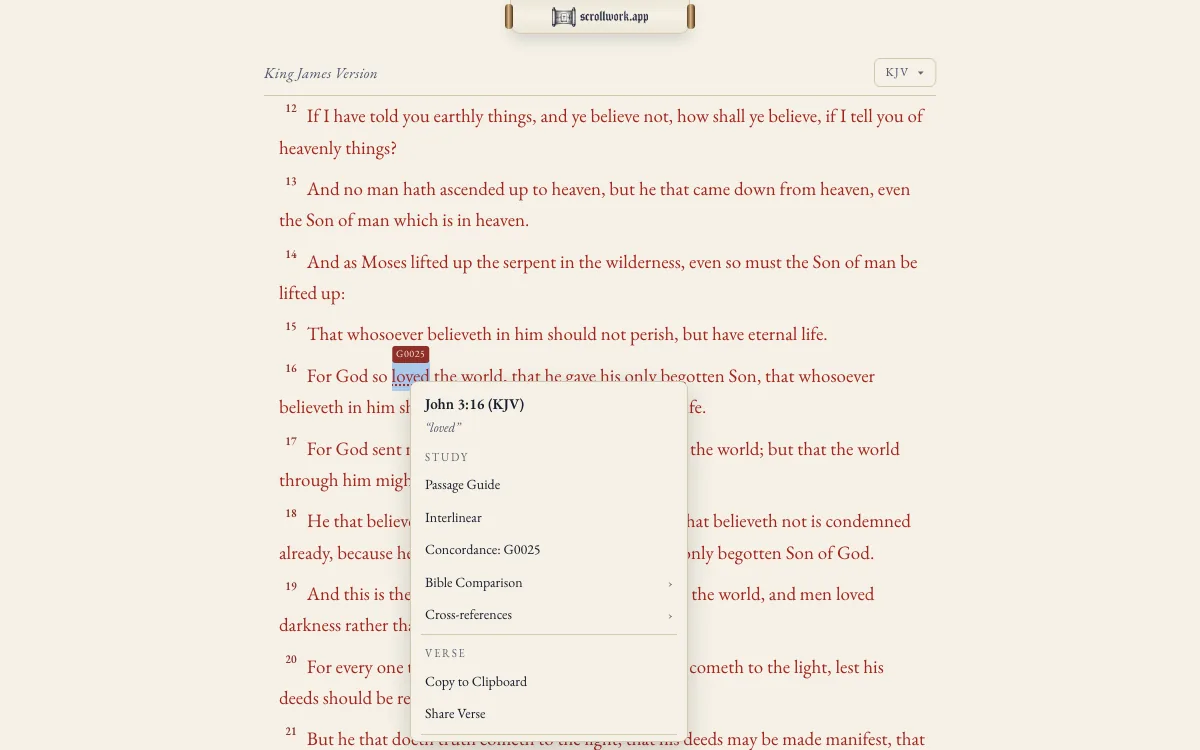
| Notes | ✓YesYour notes on any verse | PartlyIn its apps only, a chapter at a time; none on the website | ✓YesNotes, kept with your account |
|---|
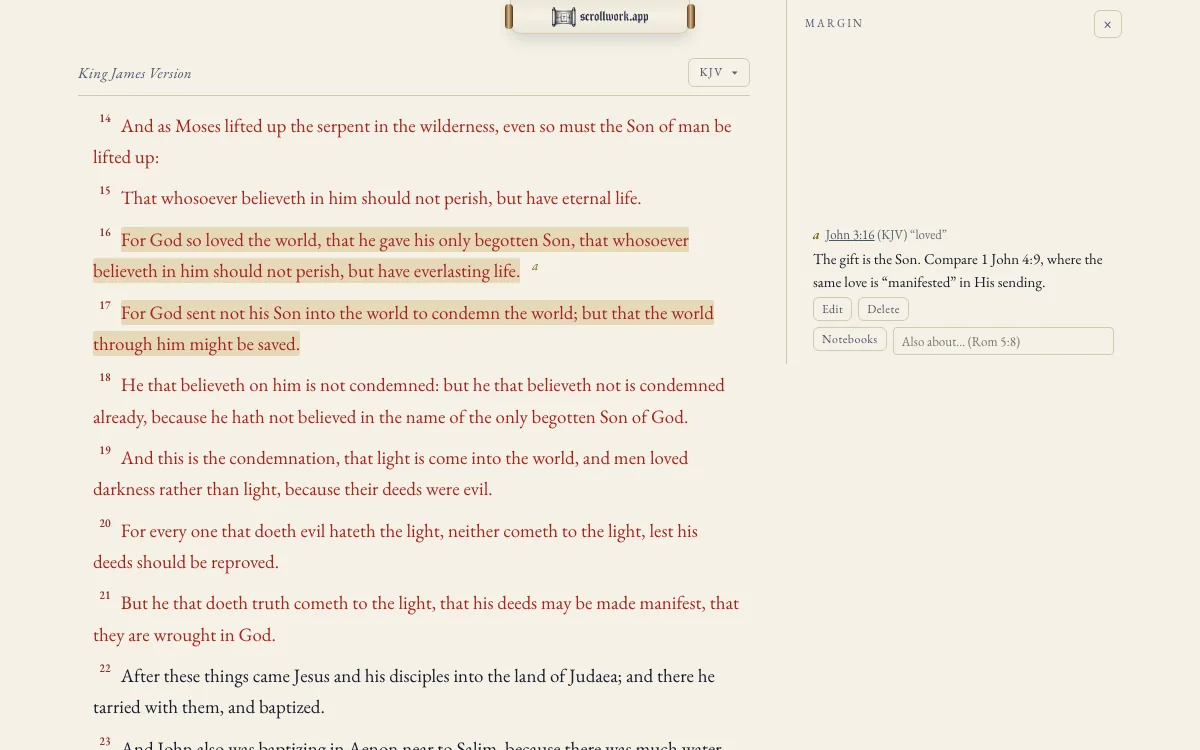
| Notes in the margin, beside the verse | ✓YesYour notes in the margin, beside their verses | ✗NoChapter notes in a notepad, not a margin | –Not confirmedNotes open in a Notes panel; a margin column not shown on its pages |
|---|
| A note set at a word in the text | ✓YesA note opened in the text at its word | ✗NoNotes are kept by chapter | ✓YesA note anchored to a word, shown as an icon beside it |
|---|
| Notebooks | ✓YesNotes kept in notebooks | PartlyIn its Android app | ✓YesNotebooks group your notes |
|---|
| Export your notes | ✓YesAs a file you keep | PartlyBy email from its iPhone app | ✓YesPrint and export, on the desktop only |
|---|
| Print your notes | ✓YesIn the browser, on any computer | ✗NoNothing of it on its pages | ✓YesOn the desktop only |
|---|
| Back up and restore to a file | ✓YesA backup file, and a reminder to make one | ✓YesTo iCloud from its iPhone app; backup and restore on Android | –Not confirmedNotes live in the account; a file backup not shown on its pages |
|---|
| Highlights | ✓YesInks you name and manage | ✓YesSeven colours you can rename, in its apps; none on the website | ✓YesRicher: your own styles, with glow, borders, images and labels |
|---|
| Underlines | ✓YesSingle and double | ✓YesHighlight and underline, in its apps | ✓YesEmphasis markup among its styles |
|---|
| A highlight opens to every verse it marks | ✓YesEach ink opens to every verse in it | –Not confirmedNot settled by its own pages | –Not confirmedNot settled by its own pages |
|---|
| Bookmarks in folders, managed in bulk | ✓YesFolders, search and moving many at once | PartlyFolders in its Android app; managing many at once not shown | –Not confirmedNot settled by its own pages |
|---|
| Across your devices | Coming soonKept on your device for now; a backup moves them between devices; they sync once accounts arrive | PartlyThe app backs up to iCloud; syncing notes between devices is not stated on its pages | ✓YesNotes and highlights sync across devices when online |
|---|
| Search your own study | ✓YesOnly the verses you noted, highlighted or bookmarked, read on your device | ✗NoIts Bible search covers Scripture; its help names no search of your notes | ✓YesSearch your notes by keyword, and text within a highlight style |
|---|
| Timelines and charts |
|---|
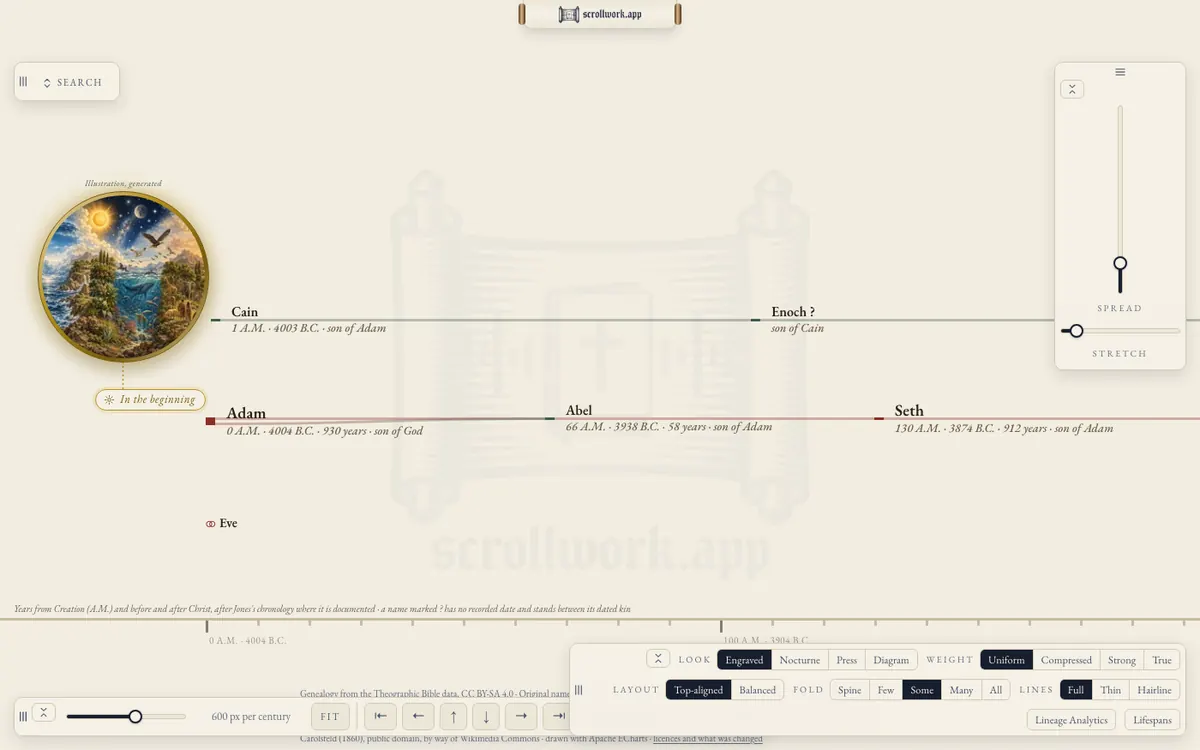
| The Bible's history as one timeline you zoom | ✓YesThe whole account on one canvas you zoom | PartlyTimeline documents to read, not one timeline | ✓YesAdvanced Timeline, in its subscriptions |
|---|
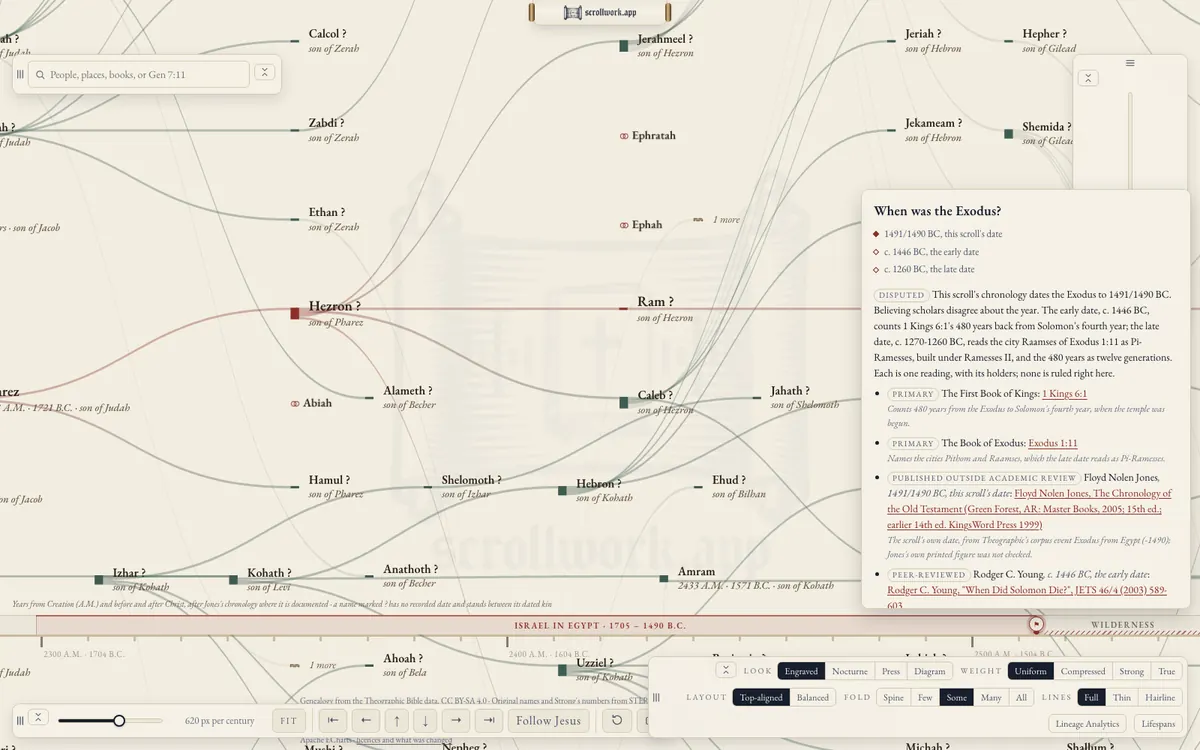
| The genealogy from Adam to Jesus, drawn on time | ✓YesThe Lineage of Jesus Christ | ✗NoNo genealogy among its charts or timelines | –Not confirmedNot settled by its own pages |
|---|
| Redraw the timeline for one era or span, and share it | ✓YesScrollwarp, shared as a link | ✗NoNothing of it on its pages | PartlyIts Timeline filters by date and era; a shared link not shown |
|---|
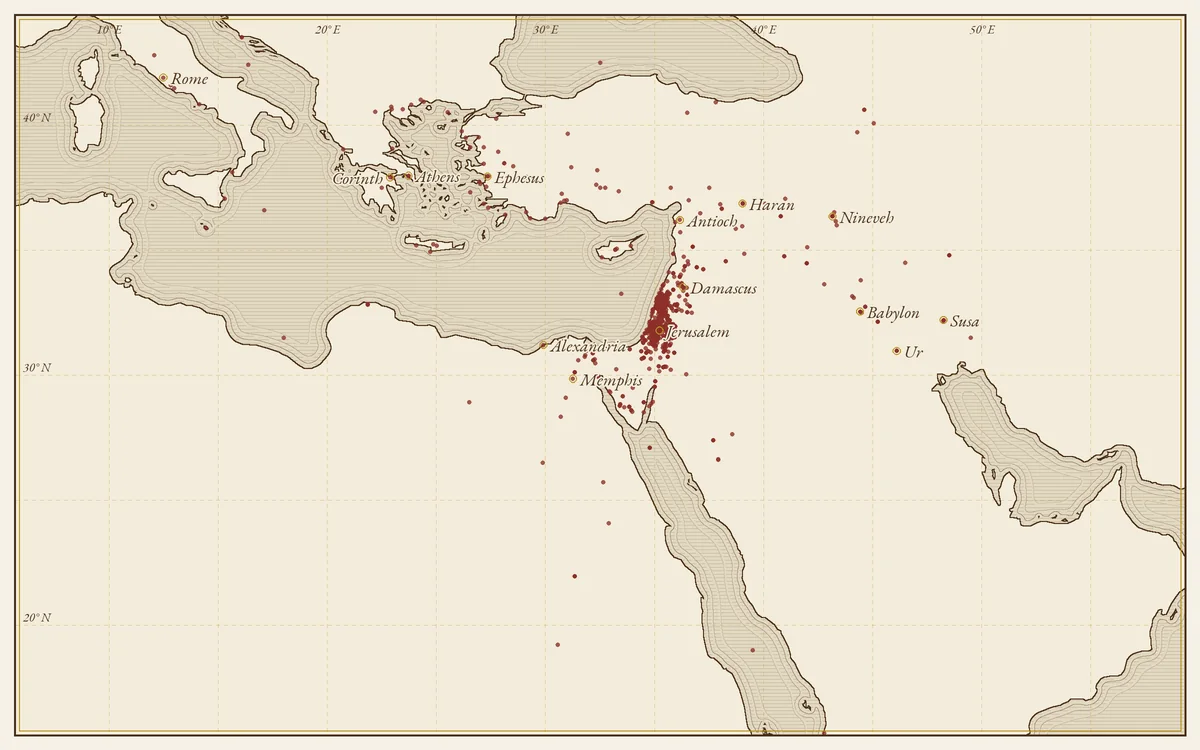
| Archaeological finds placed at their date | ✓YesEach find with its museum and credit | –Not confirmedNot settled by its own pages | –Not confirmedNot settled by its own pages |
|---|
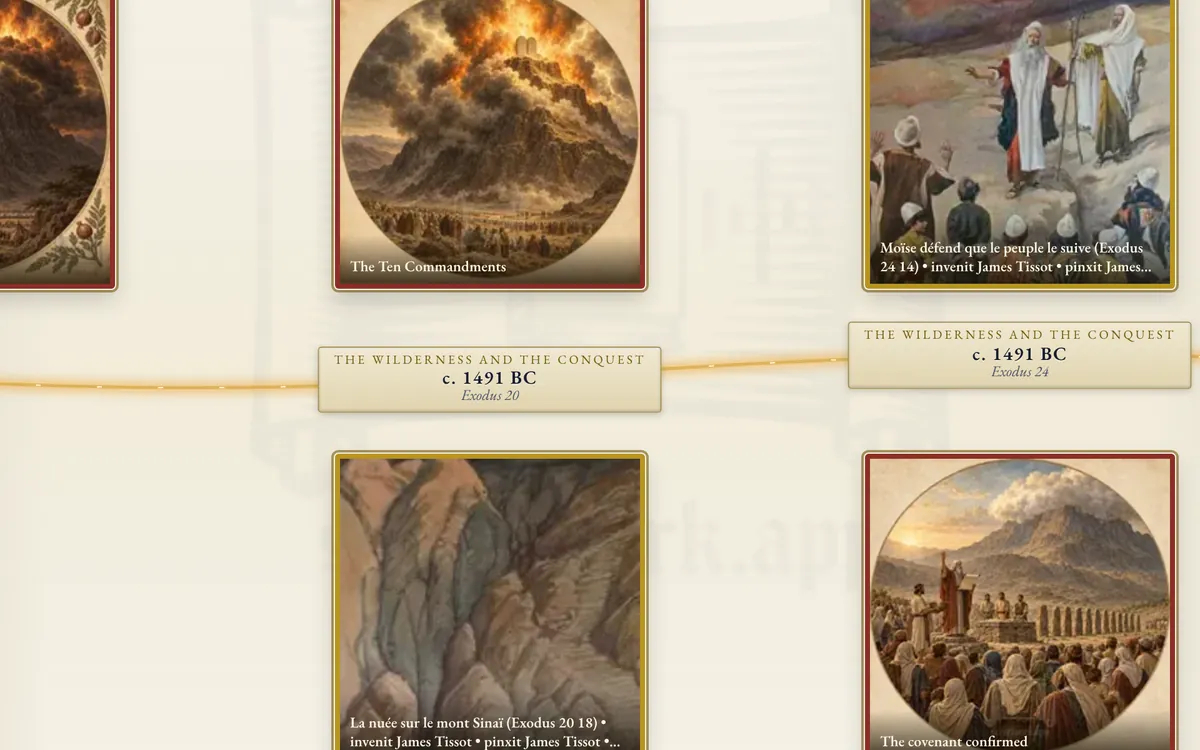
| Biblical art, each work at the event it shows | ✓Yes551 works, each at its event | PartlyA gallery by book and links from each verse, not placed by event | PartlyA Media Tool, not placed by event |
|---|
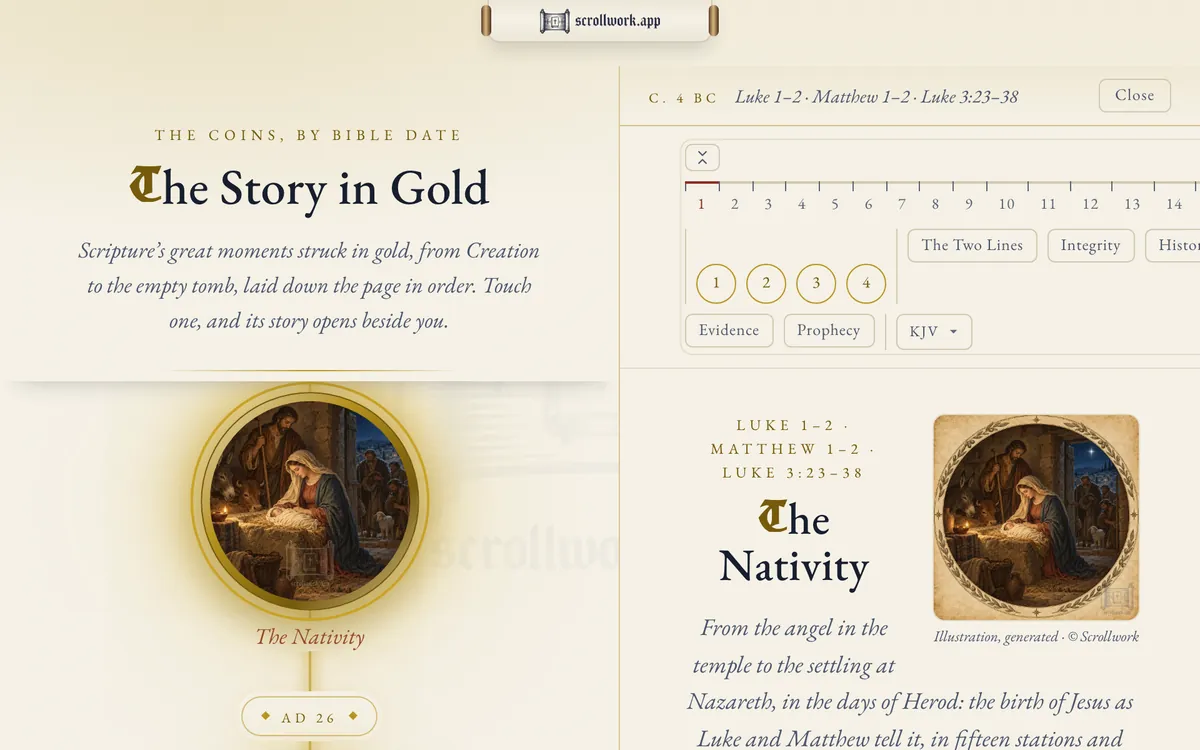
| Scripture's great moments told in order | ✓YesThe Story in Gold | –Not confirmedNot settled by its own pages | –Not confirmedNot settled by its own pages |
|---|
| Compare up to four people side by side | ✓YesIn the Drawer | –Not confirmedNot settled by its own pages | –Not confirmedNot settled by its own pages |
|---|
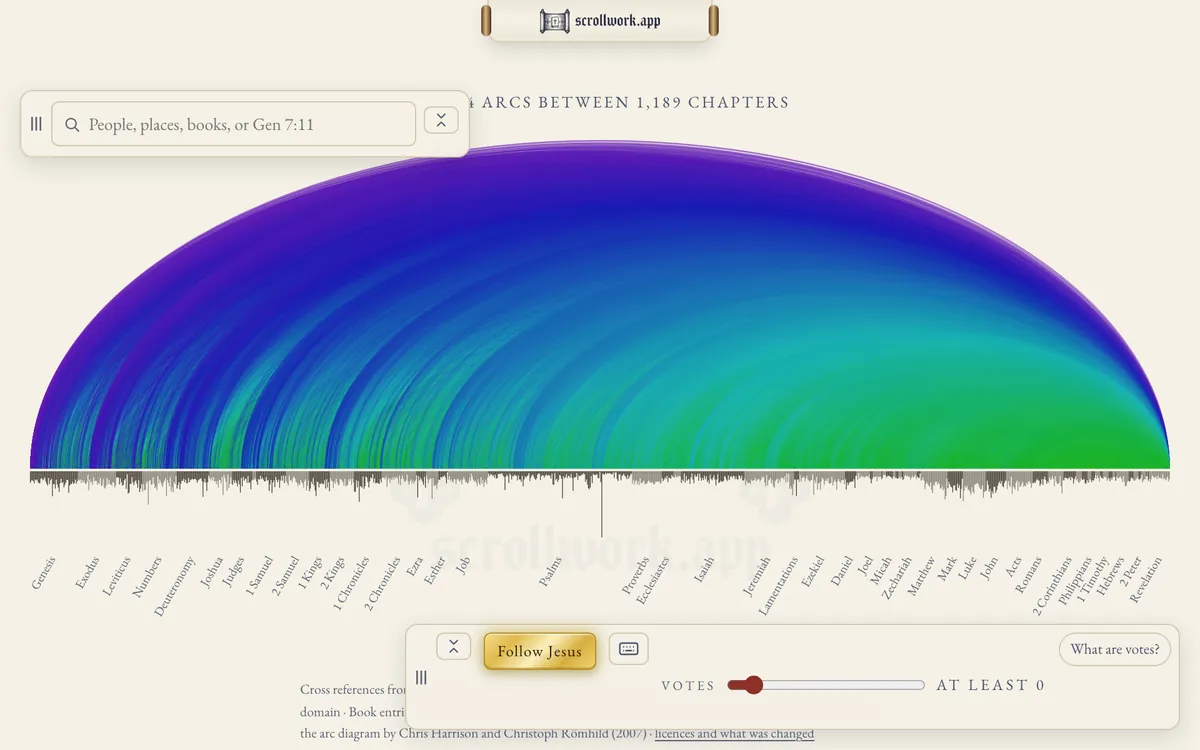
| Every cross-reference drawn as arcs | ✓YesEvery cross-reference, as arcs over the books | ✗NoIts charts are documents to read | –Not confirmedNot settled by its own pages |
|---|
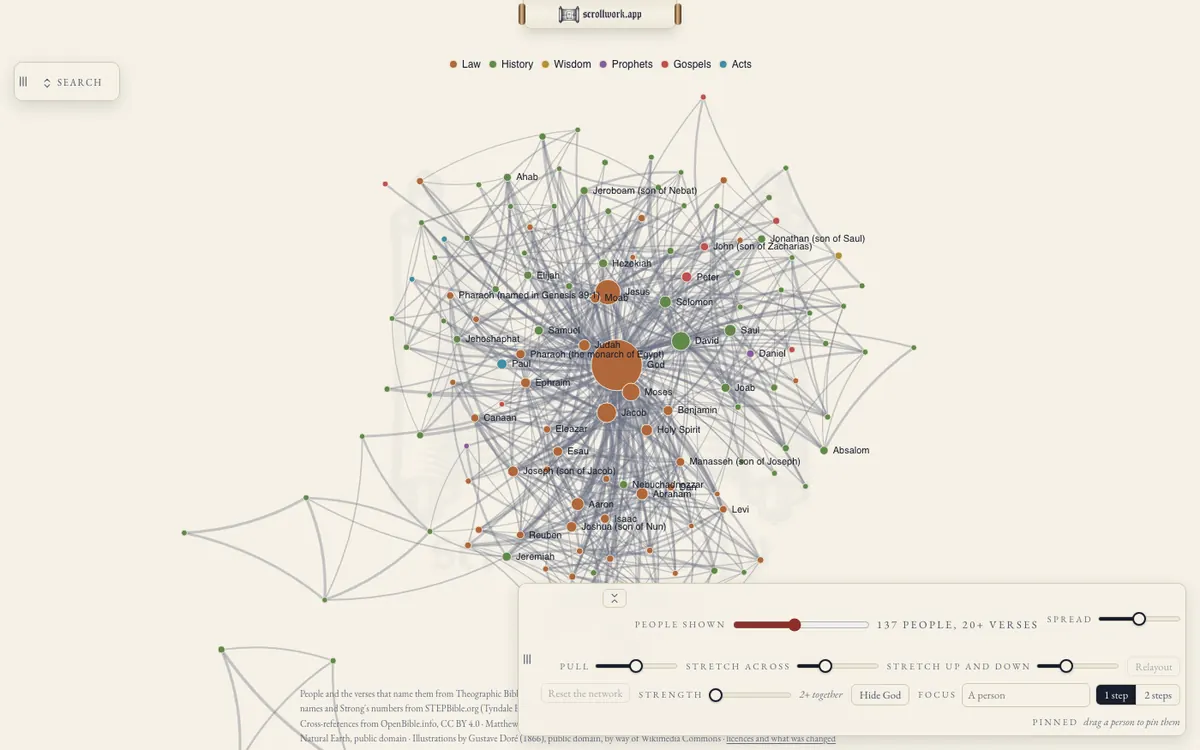
| The people of the Bible as a network | ✓YesWho is named with whom, as a network | ✗NoIts charts are documents to read | –Not confirmedNot settled by its own pages |
|---|
| The sixty-six books as one chart, with your reading on it | ✓YesThe Bible Library, your reading marked on it | ✗NoIts charts are documents to read | –Not confirmedNot settled by its own pages |
|---|
| Scrollwork's own |
|---|
| A verse's place in Bible history | ✓YesIts people, places and events, each opening on the Lineage or the people network | ✗NoNot among the tools on the pages read | PartlyThe Factbook gathers people, places and events |
|---|
| Your notes on the timeline | ✓YesYour notes and highlights marked on the Lineage; a notebook read in time order | ✗NoNot among the features on the pages read | ✗NoNot in its Timeline help |
|---|
| Search by when it happened | ✓YesFilter by a span of years or an era, and sort the results by when it happened | ✗NoResults are in the Bible's order; no filter by date or era in its help | PartlyIts Timeline filters events by date and era; its Bible search help names no such filter |
|---|
| Contested dates shown with each position and who holds it | ✓YesEach position, its holder, and no ruling | –Not confirmedNot settled by its own pages | –Not confirmedNot settled by its own pages |
|---|
| Evidence marked Confirmed or Contested, with its sources | ✓YesEach find with its holder and status | –Not confirmedNot settled by its own pages | –Not confirmedNot settled by its own pages |
|---|
| Apps, phones and print |
|---|
| Native phone apps | ✗NoRuns in the web browser; no native app | ✓YesOn iPhone, iPad and Android | ✓YesOn iPhone, iPad and Android |
|---|
| Read offline | ✗NoNot yet; it needs a connection | ✓YesBibles downloaded in its apps | ✓YesOn the desktop, and books downloaded on a phone |
|---|
| Every feature on a phone, in the browser | ✓YesThe reader, the scrolls and the charts, each in a phone's form | PartlyNotes and highlights in the apps only; Strong's inline on the web only | PartlySome tools on the desktop only |
|---|
| Runs with no install, on any computer | ✓YesIn the web browser | ✓YesIts website | PartlyA web app; its desktop app needs a recent system |
|---|
| Print and export in the browser, on any computer | ✓YesYour notes and the scrolls, from the browser | PartlyThe page printed by the browser | ✗NoOn the desktop only; copy and paste elsewhere |
|---|
| Print the timeline, or save it as a poster | ✓YesThe view, or the whole account as a poster | ✗NoNothing of it on its pages | PartlyPrint and export on the desktop; a timeline print not named |
|---|
| Privacy and accessibility |
|---|
| Your notes stay on your device, never sent to us | ✓YesKept in your browser, never sent to Scrollwork | PartlyBacked up to your own iCloud; its pages do not say they stay off its servers | ✗NoKept in your account and synced |
|---|
| No advertising or analytics trackers | ✓YesNone sends your reading to an advertising or analytics service | ✗NoIts policy names its ad services | ✗NoIts policy names Google Analytics and Amplitude |
|---|
| Your data is never used for marketing | ✓YesYour reading is yours | ✓YesContact details never sold, rented or traded | ✗NoIts policy allows marketing and advertising |
|---|
| A published accessibility statement, with its test results | ✓YesWCAG 2.2 AA, partly; every page tested | ✗NoNone found; its app listing names no accessibility features | ✗NoNone found; its app listing names no accessibility features |
|---|
| Movement stops when your device asks | ✓YesReduced motion honoured | –Not confirmedNot settled by its own pages | –Not confirmedNot settled by its own pages |
|---|
| Price and access |
|---|
| Free to use | ✓YesFree | ✓YesFree, on the web and in its apps | PartlyLogos Basic is free; feature subscriptions and libraries are paid |
|---|
| No advertising | ✓YesNo advertising | PartlyNone seen in its apps; its website shows Sponsors | ✗NoIts Android app is labelled Contains ads |
|---|
| Nothing locked behind a payment | ✓YesNothing today; companion works will have a price | ✓YesNo paid tier on its pages | ✗NoSome tools in paid plans only |
|---|
| Read without an account | ✗NoBehind a free sign-in | ✓YesMost of it, without ever creating an account | ✓YesA limited version without an account |
|---|